VIETNAM WORK PERMIT VS WORK VISA VS TEMPORARY RESIDENCE CARD: WHAT’S THE DIFFERENCE?
Every year, thousands of foreign professionals land a job offer in Vietnam and immediately face a confusing wall of acronyms: WP, LD, TRC. For many expats, distinguishing between a Work Permit, a Work Visa, and a Temporary Residence Card (TRC) is confusing. Enthusiasm about a new role in Hanoi and Ho Chi Minh City often collides with the complexity of Vietnam's labor and immigration system. And despite the abundance of online explanations, one fundamental issue remains consistent:
 This gap is the root cause of most delays, rejections, and last-minute border runs. Understanding how the documents connect and the legal logic that links them is essential for anyone planning to work long term in Vietnam.
1. THE STRUCTURAL GAP MOST EXPATS OVERLOOK
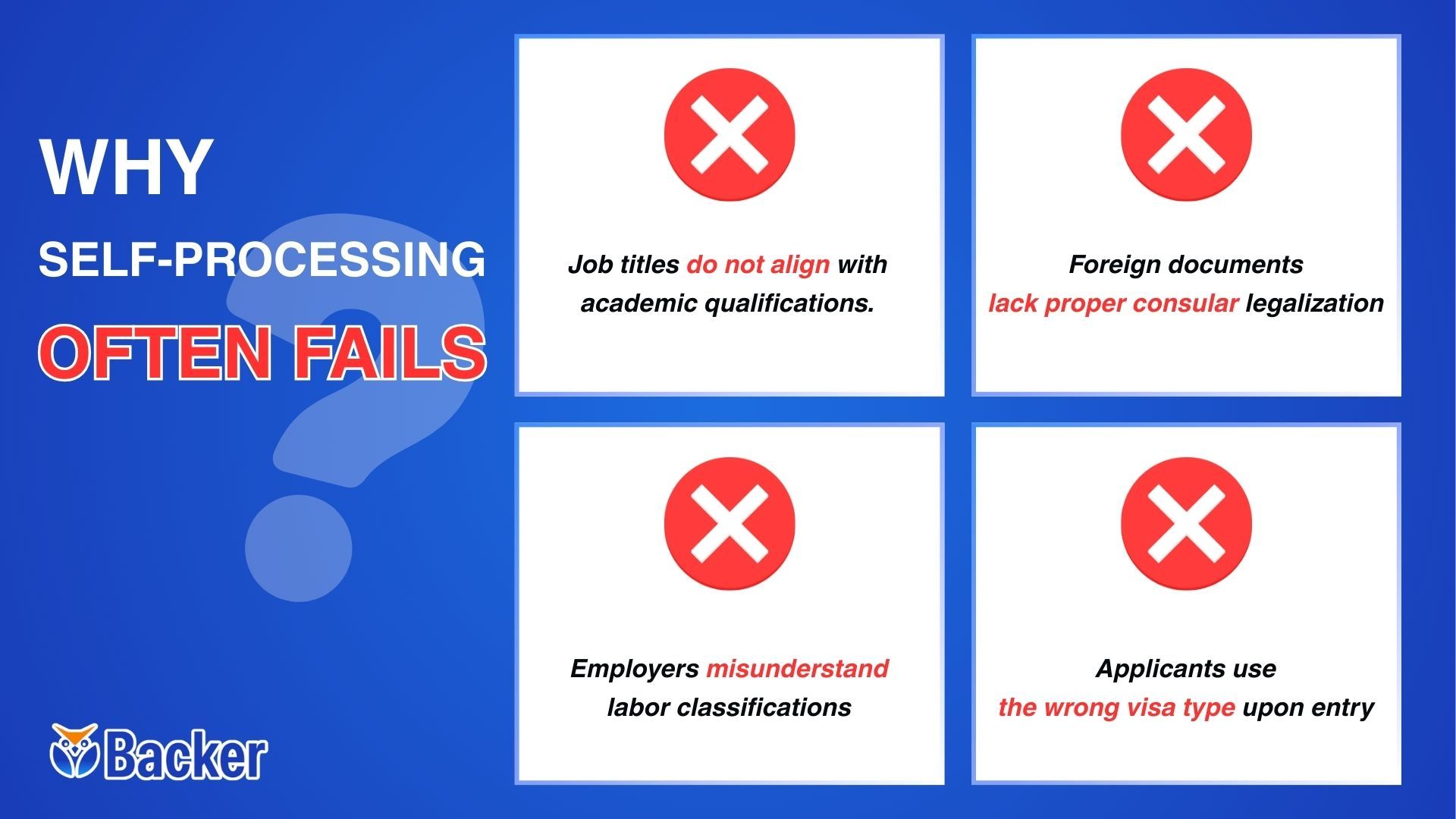
Vietnam's regulations may seem procedural on the surface, but the underlying rules are highly technical. Small inconsistencies can derail an entire application. A mismatched job title, a missing notarization, an outdated document, or a visa issued under the wrong category can lead to rejection from DOLISA or Immigration, forcing applicants into costly resets.
This dynamic consistently creates an imbalance between:
- Regulatory authorities that handle these applications daily;
- Employers who understand only parts of the requirements;
- Foreign workers who often encounter the process for the first time.
This imbalance is not about fault but about an asymmetry in expertise. And this asymmetry is the reason missteps occur even among experienced professionals who assume the process is straightforward.
2. HOW THE THREE DOCUMENTS ACTUALLY INTERLOCK
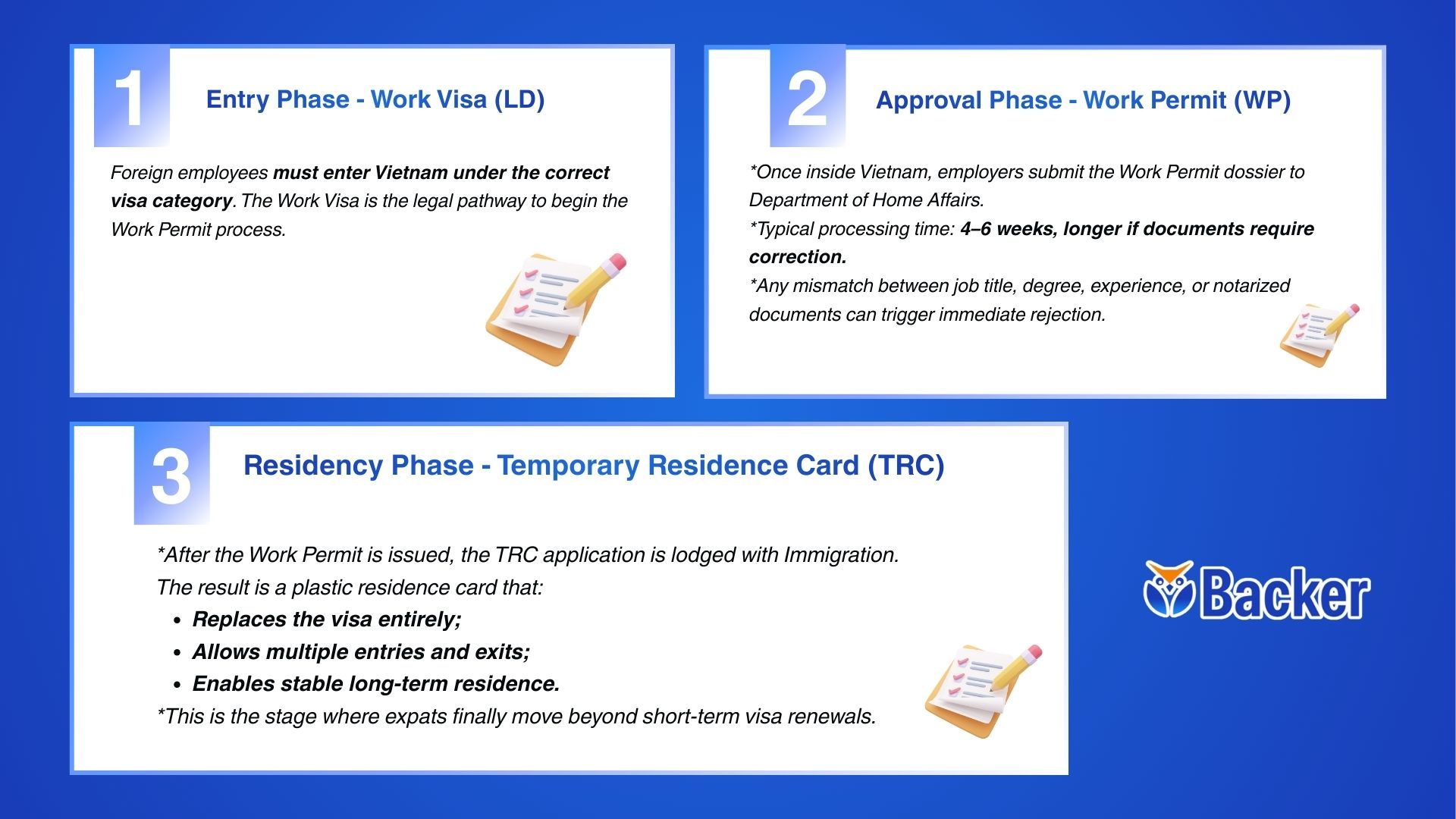
A practical way to understand the system is to view the Work Visa, Work Permit, and Temporary Residence Card as consecutive gates.
Failing to meet the conditions of one gate prevents access to the next.
The Core Principle:
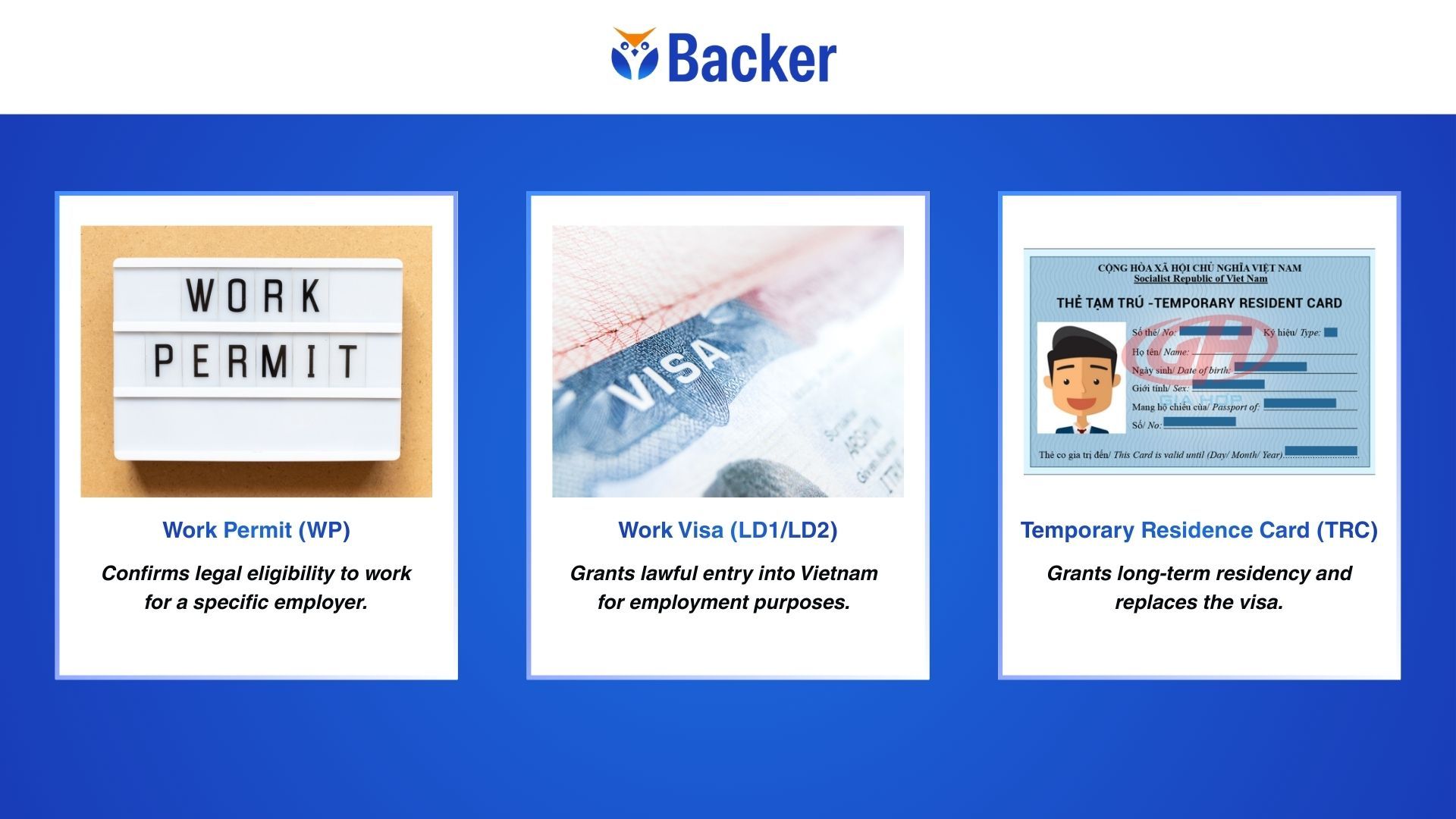
Each document supports and validates the next. Confusion typically arises when applicants assume these documents are interchangeable, but they are not.
3. DETAILED COMPARISON: THE "MUST-KNOW" DIFFERENCES
Here is the technical breakdown based on the Labor Code 2019 and the Law on Entry, Exit, Transit, and Residence of Foreigners in Vietnam.
| Feature | Work Permit (WP) (or Work Exemption Certificate) | Working e-Visa | Temporary Residence Card (TRC - LĐ1/LĐ2 Type) |
|---|---|---|---|
| Core Purpose | Authorizes you to work for a specific employer. | Authorizes you to enter and stay in Vietnam for a limited time for working purposes. This can be a multiple entry or single entry visa. | Authorizes you to reside long-term and replaces the visa. |
| Primary Right | Labor Rights: Legal protection under labor law. | Entry Rights: Permission to cross the border to work. | Residency Rights: Living in Vietnam without visa renewals. |
| Issuing Authority | DOLISA (Department of Labor, Invalids, and Social Affairs) or Management Boards of Industrial Zones. | Vietnam Immigration Department (Ministry of Public Security). | Vietnam Immigration Department (Ministry of Public Security). |
| Validity | Max 2 Years (Tied to your labor contract duration). | Often issued for 3 months initially to process WP and TRC. | Max 2 Years (Matches the Work Permit expiry date). |
| Prerequisites | Degree, Experience Certificate, Health Check, Police Clearance. | Sponsorship letter from a Vietnam-based company. | Must hold a valid Work Permit (or Work Exemption Certificate). |
| Key Legal Basis | Decree No. 152/2020/ND-CP & Decree 70/2023/ND-CP. | Law No. 51/2019/QH14. | Law No. 51/2019/QH14. |
4. THE REQUIRED SEQUENCE (IN REALITY, NOT IN THEORY)
5. WHY SELF-PROCESSING OFTEN FAILS
6. HOW OBACKER REDUCES THESE RISKS
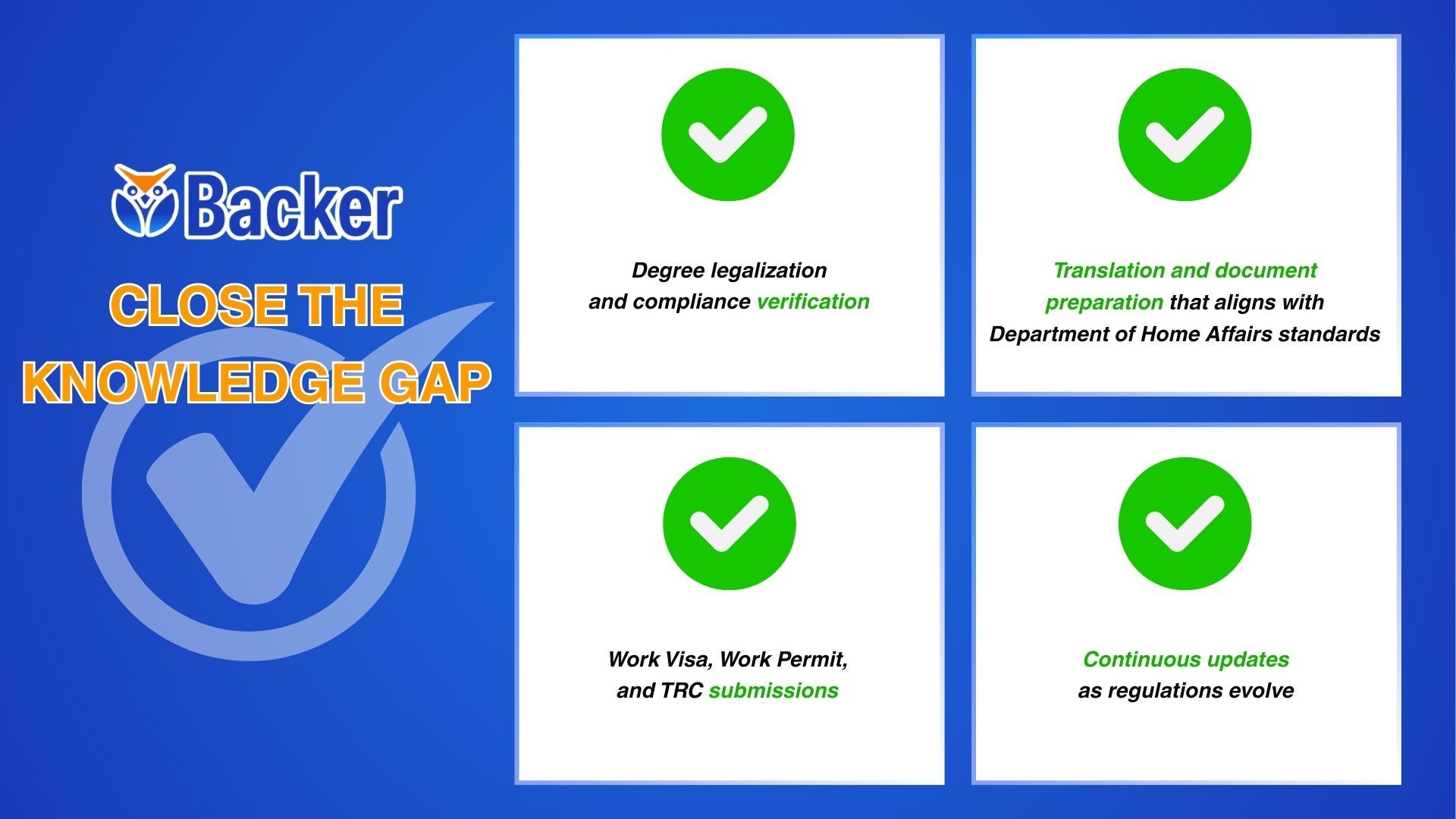 To close the knowledge gap, specialized support is essential. oBacker provides end-to-end handling of Vietnam's Immigration and Labor procedures, including:
This approach minimizes the risk of rejection and protects applicants from avoidable delays, border runs, and loss of legal status. The goal is straightforward: "Ensuring foreign professionals can work and reside in Vietnam with clarity, security, and confidence."
Published: 12/24/2025